
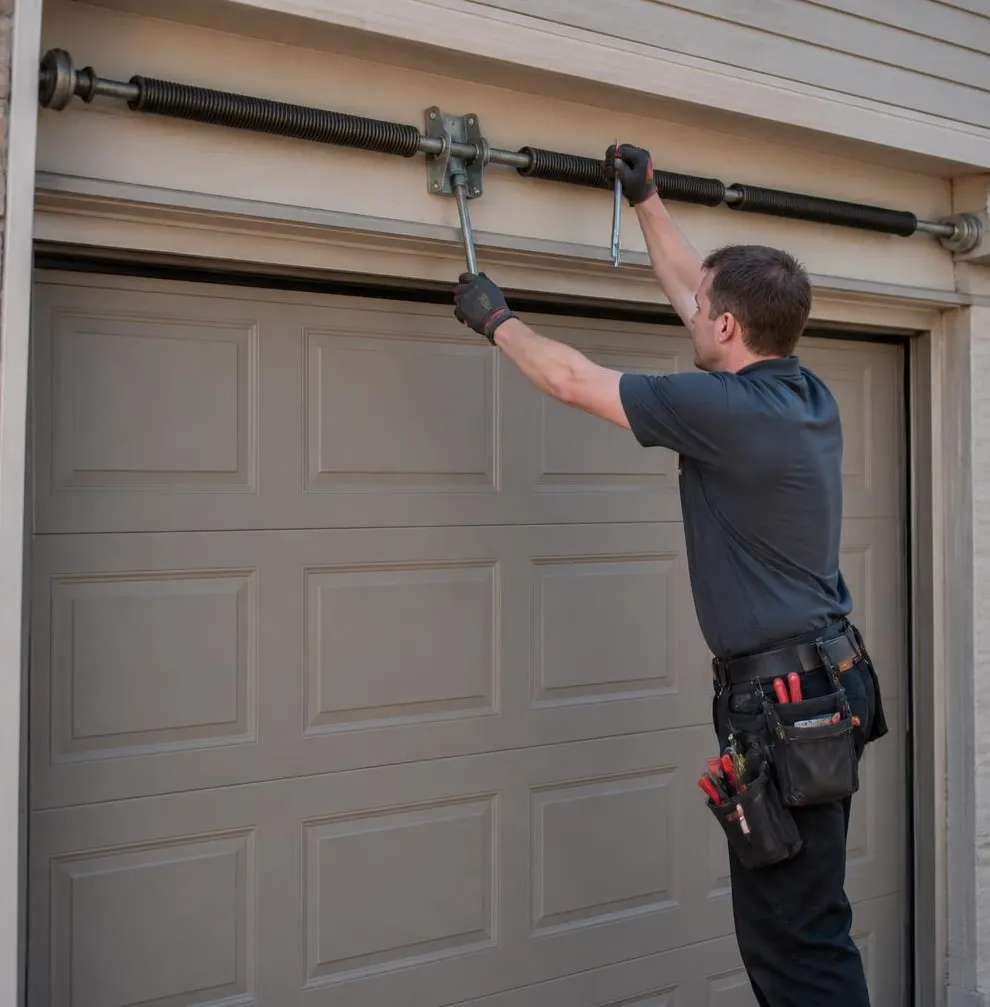
What a Technician Sees on a Typical Spring Call
The call usually starts the same way: the door won't budge, or it slams down fast and hard when someone tries to open it by hand. On inspection, there's a torsion spring sitting above the door with a visible gap where it snapped in two, or an extension spring stretched out and sagging along the side track. In this area, the wide summer-to-winter swing between hot, dry stretches and sudden winter rain puts extra stress on metal springs. Dust works into the coils during the dry months, and temperature swings cause the metal to expand and contract, both of which speed up fatigue on a part that's already rated for a finite number of open-and-close cycles. By the time a homeowner calls, the spring has usually been showing warning signs for weeks: a loud bang from the garage, the door feeling heavier than usual, or an opener that strains and reverses partway through a cycle.
Why Springs Fail When They Do
Garage door springs are rated by cycle life, not by calendar years. A single cycle is one full open-and-close. Most residential springs are rated somewhere between 10,000 and 15,000 cycles, though higher-cycle springs rated for 20,000 to 30,000 cycles are available. A household that opens the garage four times a day will wear through a standard spring faster than one that uses it once a day. Heat, dust, and rust from humidity or winter rain all shorten that lifespan further by accelerating metal fatigue and corrosion. There's rarely a single dramatic cause; it's the accumulation of cycles plus environmental wear that finally snaps the coil.
National Price Ranges for Spring Replacement
Costs vary by region, door size, and spring type, but as a general guide:
- Single torsion spring replacement: roughly $150 to $350, including parts and labor.
- Two torsion springs (standard for most double-car doors): roughly $250 to $450.
- Extension springs (pair): roughly $150 to $300, generally less expensive than torsion systems but with a shorter typical lifespan.
- High-cycle or heavy-duty springs: add roughly $50 to $150 on top of standard pricing.
These are national ranges, not quotes for any specific home. The only way to know an accurate number is to have a technician look at the door in person, since spring size is calculated from the door's weight, height, and the drum size on the torsion shaft.
What Pushes the Price Up or Down
Door Weight and Size
A heavier door, such as a solid wood door, an insulated steel door, or an oversized double-car door, needs a stronger, larger-diameter spring. Stronger springs cost more and sometimes require a larger torsion shaft or additional drums, which adds labor.
One Spring vs. Two
Most two-car garage doors run on two torsion springs. If one has broken, a reputable technician will usually recommend replacing both at the same time, since the second spring has logged the same number of cycles and is likely close to failing too. This raises the upfront cost but avoids paying for a second service call within months.
Spring Type
Torsion springs mount on a shaft above the door and are generally considered safer and longer-lasting than extension springs, which run along the horizontal tracks. Torsion systems typically cost more upfront but tend to need replacement less often.
Cycle Rating
Standard-cycle springs cost less initially. High-cycle springs cost more per spring but are worth considering for a household that uses the garage as a main entry point multiple times a day.
Condition of Related Hardware
A spring rarely fails in isolation. Cables, drums, bearing plates, and even the torsion shaft itself can show wear from the same stress that broke the spring, especially after exposure to dust and moisture. Replacing a spring while leaving a frayed cable or worn bearing in place often leads to a second repair call soon after.
Emergency or Same-Day Service
A door that's stuck shut or stuck open is a safety and security issue, and after-hours or same-day calls typically carry a higher rate than a scheduled daytime appointment.
What a Proper Quote Should Include
Before agreeing to a repair, a written quote should spell out:
- The exact spring type and size being installed, matched to the door's weight.
- Whether one or both springs are being replaced.
- Inspection and, if needed, replacement of cables, rollers, and bearing plates.
- A safety check of the torsion shaft, end bearings, and opener force settings after the new spring is installed.
- Labor and parts broken out separately, not bundled into one vague number.
A technician who tests the door's balance and opener settings after installing the new spring is doing the job right; skipping that step is how doors end up straining the opener again within a year.
When to Call Ontario Garage Door
If the door is heavy to lift by hand, makes a loud bang, or won't move at all, it's time to call rather than troubleshoot it yourself. Torsion springs are under serious tension and are not a safe DIY repair. Ontario Garage Door handles spring replacement with the correct spring size calculated for your specific door, plus a full hardware check so cables and bearings aren't left to fail next. For households that want to catch wear before it becomes a snapped spring, our garage door maintenance service inspects cycle wear, lubrication, and balance so you're not caught with a stuck door on a Sunday morning.
If your garage door feels heavy, noisy, or stuck, call Ontario Garage Door for a straightforward inspection and quote, serving Ontario, Rancho Cucamonga, Upland, Fontana, Montclair, Pomona, Chino, and Claremont.