
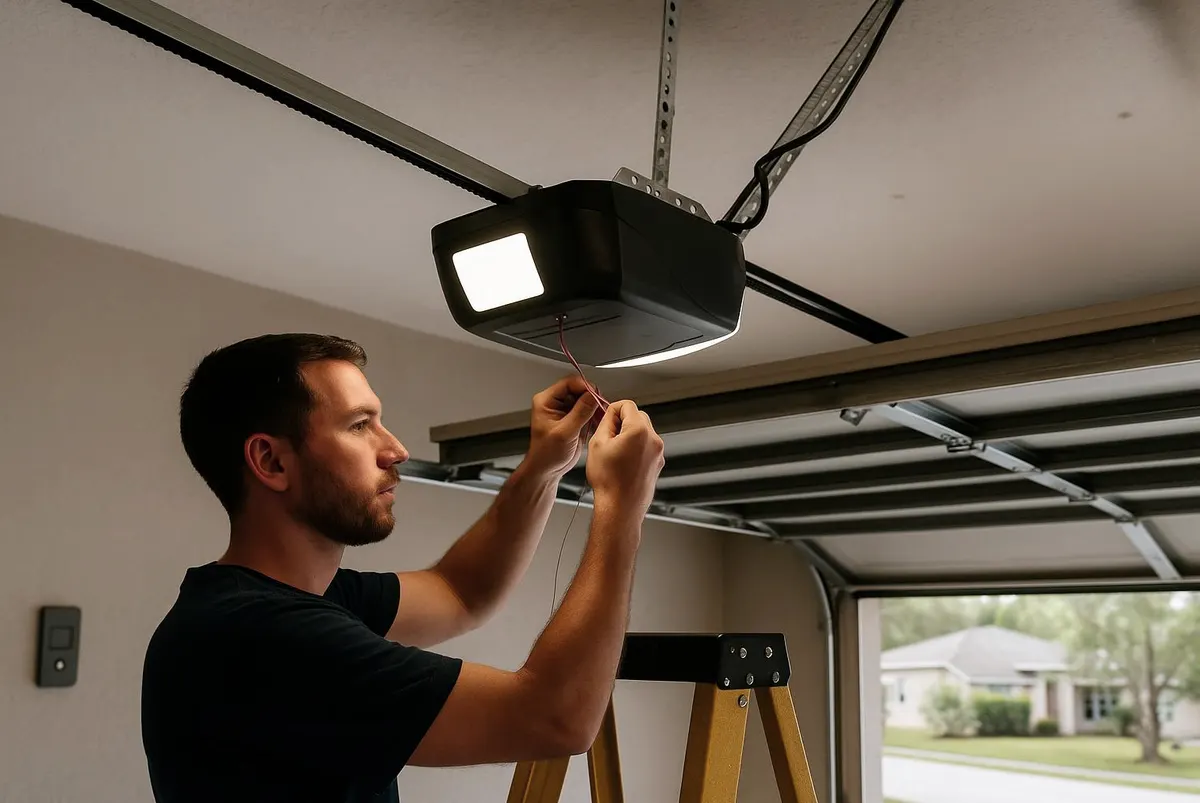
What a Technician Sees on a Typical Fall Call
Most service calls this time of year start the same way: a homeowner says the door was fine all summer and now it's grinding, hesitating, or reversing for no reason. Nine times out of ten, the tech pulls back the weatherstripping and finds it cracked and brittle from months of inland heat and dry air. The tracks are coated in a layer of fine dust that's turned gummy where old lubricant mixed with grit. The springs have been cycling through 100-degree afternoons for months, and now that mornings are cooler, the metal behaves differently under tension. None of this is dramatic on its own, but stacked together it's exactly what turns a minor fall tune-up into a January breakdown.
Why the Season Change Matters Here
Ontario and the surrounding Inland Empire don't get a hard freeze, but the shift from a long dry season into winter rain still stresses a garage door system in specific ways. Summer dust and wildfire-season haze settle into every moving part. Then the first rains wash that grit into tracks and hinges instead of away from them, which is how dry squeaks turn into wet grinding almost overnight. Steel components also contract slightly as temperatures drop, which is usually when a spring that was already fatigued from summer use finally lets go.
Weatherstripping and Seals
Check the rubber seal along the bottom of the door and the vinyl strips on the sides. After a dry season, these are often cracked, stiff, or pulling away from the track. A compromised seal does two things once winter rain starts: it lets water pool at the base of the door, and it lets cold, damp air into the garage, which matters if you store anything sensitive to moisture in there. Replacing weatherstripping is a straightforward fix, and it's worth doing before the first real storm rather than after you've already got water intrusion.
What to Look For
- Stiff or brittle rubber that no longer flexes when you press it
- Visible gaps along the bottom when the door is closed
- Water staining or dirt lines on the garage floor near the door
Springs Under Seasonal Stress
Springs do almost all the lifting work on a garage door, and they're also the component most likely to fail without warning. A spring that's been working through a hot, dry summer has already absorbed a lot of wear. As temperatures cool, metal contracts slightly, and a spring that was close to its limit often fails right around this seasonal shift. Warning signs include the door feeling heavier than usual when opened manually, a visible gap in the spring above the door, or a loud bang from the garage (that's often the sound of a spring snapping).
Spring replacement is not a DIY job. These components are under extreme tension, and attempting to replace one yourself is genuinely dangerous. If you're noticing any of the symptoms above, it's worth having a technician inspect the spring before it fails on its own schedule, usually at the least convenient moment.
Tracks, Rollers, and Hinges
This is where the dry-season-to-rainy-season transition does the most damage. Dust that built up over the summer mixes with the first moisture of the season and turns into a gritty paste inside the tracks. That paste causes rollers to bind, which puts extra strain on the opener motor and the springs. A simple cleaning with a dry cloth, followed by a garage-door-specific lubricant on the hinges and rollers (not WD-40, which attracts dust rather than repelling it), goes a long way. While you're at it, check that the tracks are still aligned; a track that's slightly bent from months of use can cause the door to bind or come off-track entirely once rollers are under added resistance.
Opener and Safety Sensors
Garage door openers rely on photo-eye sensors near the bottom of the tracks to detect obstructions. These sensors sit low enough to accumulate dust, cobwebs, and in winter, condensation. If your door reverses unexpectedly or refuses to close, a dirty or misaligned sensor is one of the most common causes. Wipe the sensor lenses clean and make sure nothing has shifted their alignment. If the issue persists, the opener itself may need attention, particularly if it's been struggling against a door that isn't moving as freely as it should.
Insulation and Garage Use
If your garage doubles as a workspace, storage area, or laundry room, an insulated door makes a real difference once the rainy season sets in. Uninsulated doors transfer outside temperature and moisture directly into the garage, which can affect anything stored against the walls. This isn't an urgent seasonal fix, but if you're already noticing drafts or dampness, it's worth considering when planning any door replacement.
When to Call Ontario Garage Door
If you're hearing grinding from the tracks, noticing a door that feels heavier or slower than it used to, or seeing cracked weatherstripping you can't replace yourself, it's time to call in a technician rather than wait for a full failure. Ontario Garage Door handles spring replacement safely, with the right tools and tension equipment, and performs full garage door maintenance visits that cover tracks, rollers, hinges, and opener sensors in one trip. A pre-winter maintenance check is usually faster and less disruptive than an emergency repair after a spring snaps or a door comes off-track during a storm.
If your garage door has been acting up as the weather shifts, don't wait for the first heavy rain to find out how bad it's gotten. Call Ontario Garage Door for a seasonal maintenance visit or repair, serving Ontario, Rancho Cucamonga, Upland, Fontana, Montclair, Pomona, Chino, and Claremont.